
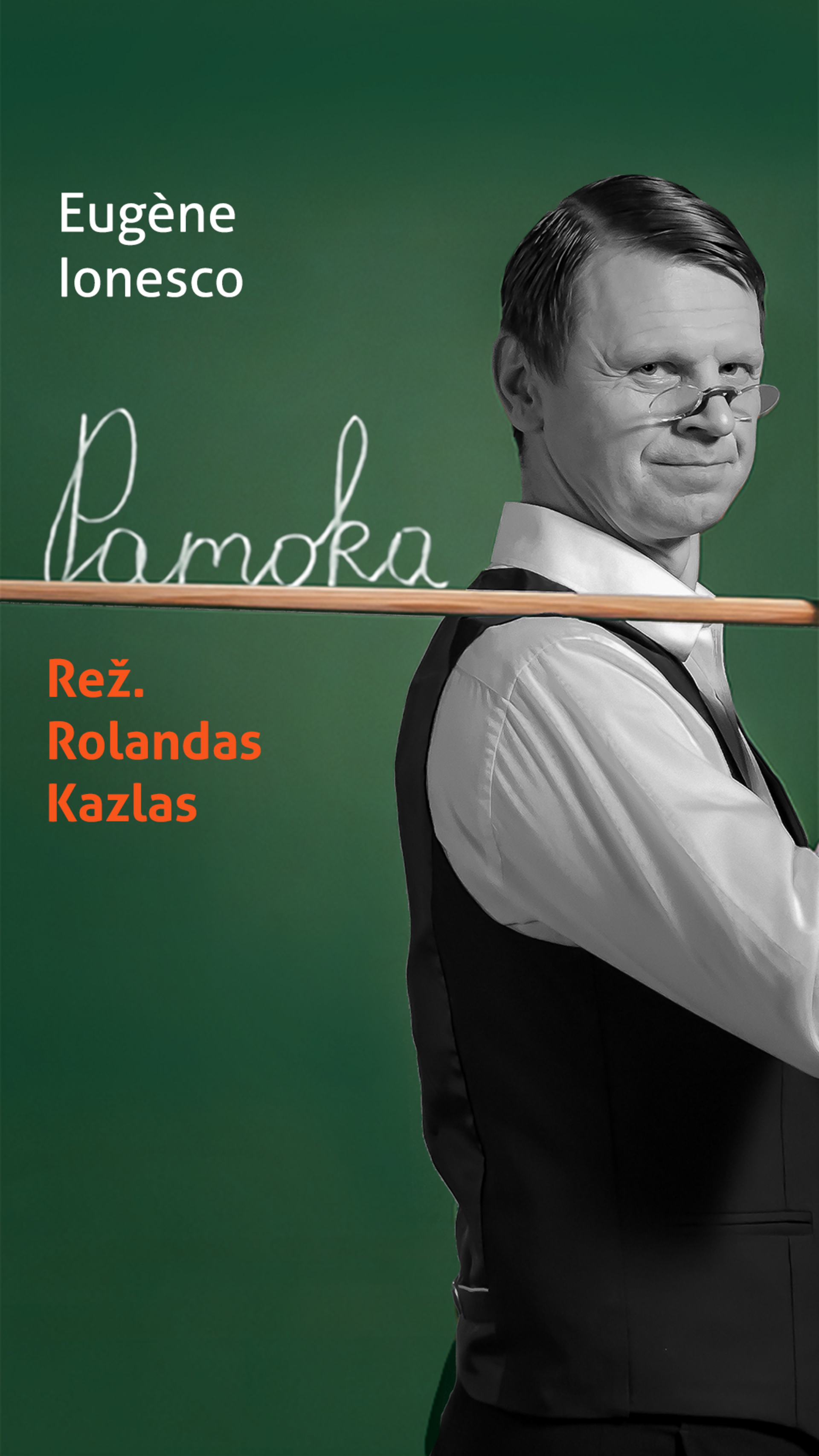
Rolandas Kazlas invites you to "The Lesson"*
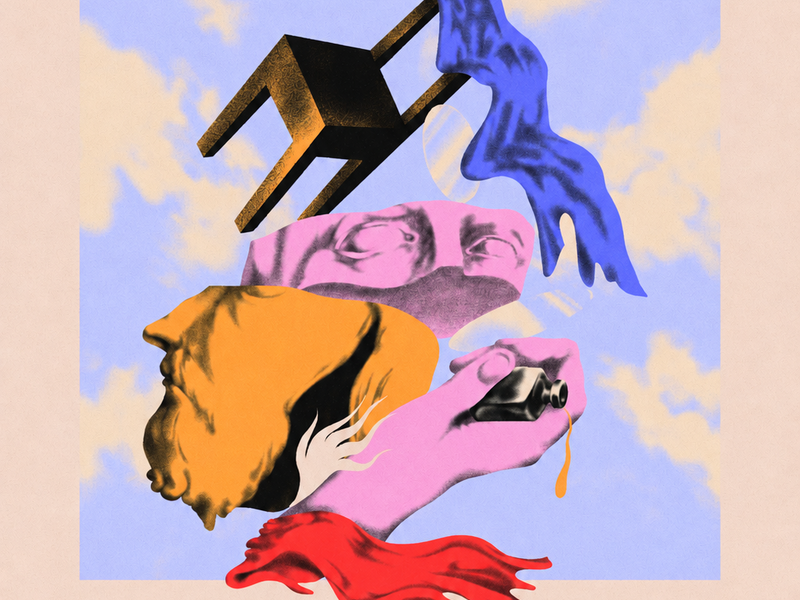
The mystery of education, science, culture and health**, educational drama, comedy, tragedy, therapy and Wikipedia*** and other absurdities**** – in the premiere performance "The Lesson". Based on the play of the same name by French playwright Eugene Ionesco.
The performance is a "Lesson" for those who want to know what chalk was (and is still) eaten with. Without a break or a break... The duration of the "Lesson" will depend on the student's knowledge, abilities, desire or unwillingness to learn, and on the teacher's mood and patience, which will depend on the student's knowledge, abilities, desire or unwillingness to learn, and the teacher's...
And that "The Lesson" promises to be fun, playful, interesting and useful - this can be expected, three very unique, interesting actors from different generations will meet on stage: Taura Kvietinskaitė (Student); expressive actor Audronis Rūkas (Staff on Duty) and the director of the play, Rolandas Kazlas, who creates the role of the teacher, who is always able and knows how to pleasantly surprise. The head of the art circle, the lively corner and the costume designer - Neringa Keršulytė.
The Romanian-born French playwright Eugene Ionesco (1909-1994) is considered one of the pioneers of absurdist drama and one of the most significant playwrights of the 20th century. The most striking examples of absurdist drama he created are the tragicomedy "The Bald Singer" (La Cantatrice chauve, 1950), "The Lesson" (La Leçon, 1951), as well as "The Chairs" (Les Chaises, 1952) and "The Rhinoceroses" (Rhinocéros, 1959). His one-act dramas are full of illogical situations, clichés, and hyperbolically polite dialogues. By ridiculing banality, the absurdity of human existence is shown. The playwright himself called them "anti-plays".
Director Rolandas Kazlas shares his thoughts about the premiere performance "The Lesson": "Although the plays of the French playwright E. Ionesco are considered absurd plays, to be honest, I do not see any absurdity in them. In life itself, in everyday life, in people's thinking, communication or in any area, there is much more absurdity and it is much funnier, more painful and more cruel. The text of the play itself is like a carnival, a clown's costume, covering the real body: a person, society, states, humanity... One can feel that the playwright, under the juggling of words, equilibrist, absurd phrases and seemingly nonsense, calls to see, to discern serious things. In the one-act play by E. Ionesco - "The Lesson", described by the playwright himself as a comic drama, there is a lot of comedy, drama, and even a sense of tragedy. In a word – the play has everything you need for a good performance and it is not for nothing that the playwright called the play very simply and accurately – “Lesson”. Unlearned lessons often have painful consequences. Life exams, tests are more difficult and serious tests, and the strictest teacher at school can only appear as a “gentle lamb” compared to those “Teachers” who want to teach everyone and the whole world a lesson at once, and such people, unfortunately, appear from time to time, and, as we know, there has been no shortage of them in the history of mankind.
I think the playwright is talking about how important it is to learn, know, be able, knowledgeable, listen, be alert, attentive, alive, strive for something, improve, and how dangerous it is to be dark, uneducated, uncultured, indifferent, illiterate, uninterested in anything, and wanting only to receive a grade, certificate, or graduation diploma from a teacher or educational institution...
Who might be interested in the play "Lesson"? "First of all, I think, for those who want to learn and teach, and those who don't want to learn and teach. For those who write the word "absurd" with the letter "b", and for those who write the same word with the letter "p" - "absurd". And for those who write the word "theatre" with the letter "a", and for those who write - "tetras", without the letter "a". Nothing like that, but... after all, everything starts with "A...".
"He who pays nothing pays the most."
Payer


Share link by e-mail