
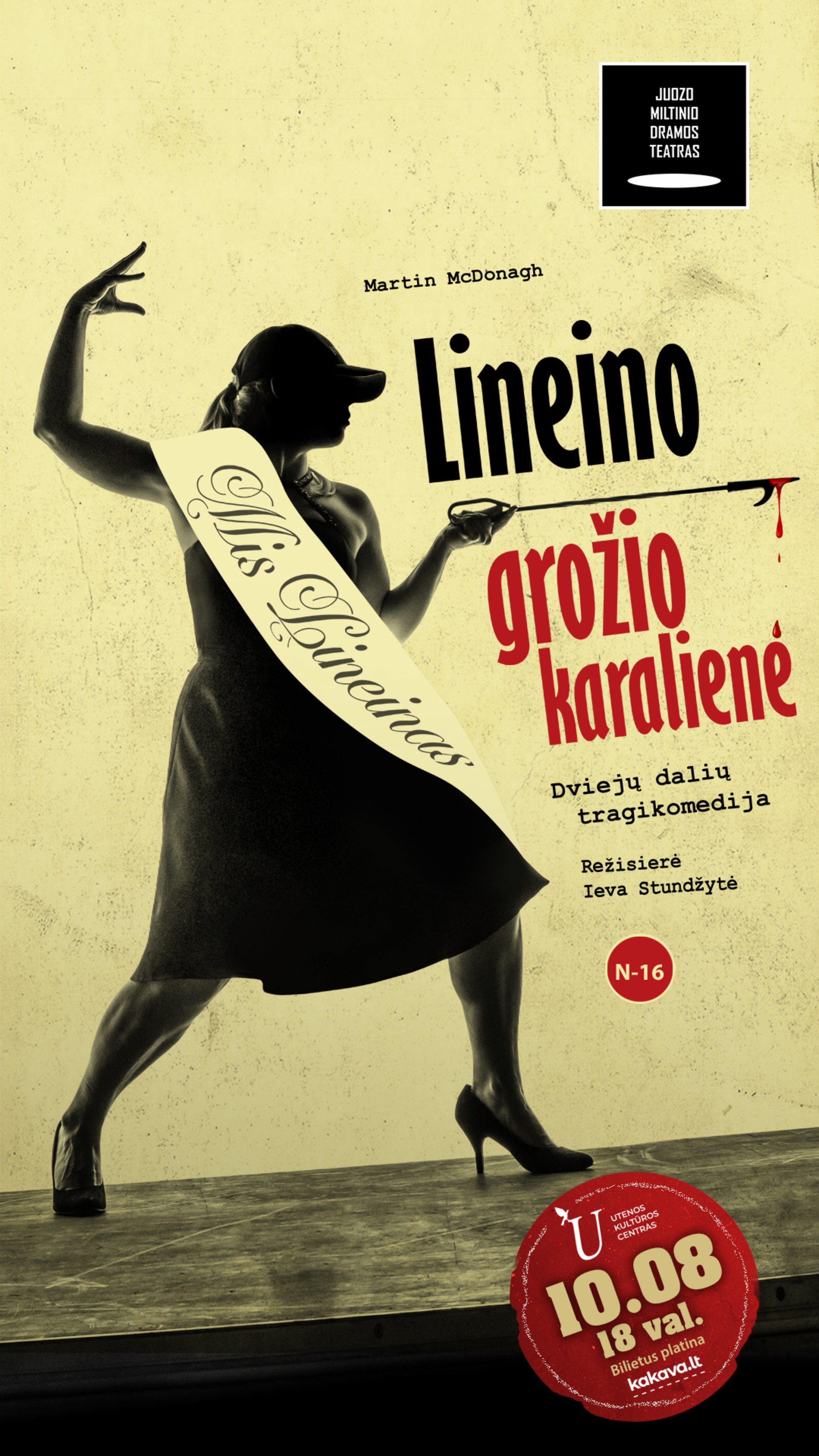
Martin McDonagh THE BEAUTY QUEEN OF LINEN two-part play
"There are many other equally dangerous things that can end you just as easily. Or maybe even easier."
– What are they?
– Well, this stinking town of ours.
In a remote Irish town in the Connemara mountains, two women live - a thin and unattractive spinster, Maureen, and her sick, elderly mother, Maggie. Maureen's day is filled with hatred for her mother, who is intolerant of Maggie's hypochondria, manipulativeness, the fact that the woman cannot cook soup or porridge, or that every morning she empties her chamber pot into the kitchen sink.
One day, a woman is invited to her uncle's funeral by her neighbors, brothers Pat and Ray. Maureen decides to attend and spends the night with Pat, whom she brings home. He becomes Maureen's first boyfriend, and at the same time, her ticket to leave her manipulative mother and small town behind. However, Maggie's manipulative nature and Maureen's complicated past complicate the woman's search for happiness. Will Maureen be able to free herself from the clutches of a small town and monotonous life? Or is reality not quite what it seems?
According to director Ieva Stundžytė: “My personal acquaintance with the playwright’s work took place during my studies at the Lithuanian Academy of Music and Dramatic Arts, when I saw “Pagalvinės” directed by Jonas Vaitkus at the Youth Theatre and “Lineinos’ Beauty Queen” directed by Gytis Padegimas during the Klaipėda Drama Theatre’s tour in Vilnius.
What was memorable was not the productions themselves, but above all Martin McDonagh's dramaturgy and the impressions related to it - themes that are sharp to the point of discomfort, playful and controversial dialogues written with a "light hand", paradoxical, yet somehow very recognizable situations, and black humor to the point of absurdity.
Women are also very important to me – both as actresses, as characters, and in a broader sense. I consciously look for material for performances that is for women, and although not necessarily about women, but with women. The descriptions “beautiful” or “strong” for a woman are, in my opinion, extremely ambiguous: beauty is being yourself, being free from the opinions of others, it is the feeling that you are needed, cared for, loved by yourself, and strength is the recognition of your fatigue, anger, grievances, the legalization of your entire emotional spectrum, the unmasking of stereotypes. When creating a performance, I try to purify all this and, resisting the play, realize it.”
The project is funded by the Ministry of Culture of the Republic of Lithuania.


Share link by e-mail